
Women in Science Day conferences continue to explore how to speed up the transition to gender equality in scientific careers. In its 2026 edition, BeWiSe handles a more provocative, albeit relevant theme: ‘Women under attack‘.
This event is open to everyone, regardless of gender, role, or background.
We invite higher education students, academics, university professionals, diversity and inclusion officers, and policy-makers to discuss how immigration, harassment, funding opportunities, gender biases in how excellence is perceived and evaluated, etc., are really progressing at Belgian research institutions. We will also reflect on including the gender dimension in research.
Keynote
What issues do women immigrant scientists face, and how initiatives can help them and support them?
Keynote Speaker: Dr. phil. Dipl.-Ing. Afsar Sattari
Board Member of the European Platform of Women Scientists (EPWS) and Women in Science and Engineering NuT e.V. (Germany), and Director of Goal-Electronic Print Media & Training Services
Session 1
Creating Safe, Inclusive, and Supportive Environments for All Women Scientists.
We reflect on which measures each organization implements or has set as goals to work towards; the impact they had: positive or not; were they based on rules/regulations/scientific research or was this organizational strategy.
Speakers:
-
-
- Martina Cannone (Policy Assistant in the Gender Sector of the European Commission’s Directorate-General Research and Innovation (DG RTD)),
- Prof. Florence Degavre (Professor, UCLouvain)
- Dr. Tim Thijs (Science policy advisor – Research Foundation Flanders (FWO)),
- Dr. Veronique Halloin (Secretary General FRS-FNRS),
- Diana Sarkees (Machine learning Engineer at Kantify)
-
Session 2
What is the gender dimension within your research including the hurdles you had to overcome to do this research?
Speakers:
-
-
- Dr. Hadis Shakeri (Post-doctoral Scientist – VUB),
- Malika Belrhazi (PhD student, University of Antwerp),
- Dr. Hind Hussein (Postdoctoral Research Scientist – KU Leuven),
- Prof. Liliana D’Alba (Guest Professor, UGent).
-
We will start with a networking lunch at 12h00.
We would like to thank the Research Foundation – Flanders (FWO) for sponsoring this event.
Short Bios
Afsar Sattari
Afsar Sattari has both the German and Persian nationalities, holds a Doctorate in Philosophy (Dr. phil.),
a Master’s degree in Information Engineering (M.Sc.) and a Diploma in Electrical Engineering (Dipl.-Ing.). She has lectured at the FOM University of Applied Sciences in Cologne and the GeStiK faculty at the University of Cologne. She has also delivered seminars at the University of Koblenz and the University of Applied Sciences in Koblenz. Until 2002, she managed a Documentation and Training Department in an international telecommunications company, after which she works as a freelancer and director of two other companies in Cologne.
Her research fields include gender and migration, STEM and migration, civil society and technical themes. She has published 16 books and contributed 9 articles to books published by other publishers. She has also overseen the publication of a further 24 technical books, regarding their form and content. She has given numerous speeches and interviews on echnical, sociological, and feminist topics in different languages and published over 100 articles on these themes. She is currently a member of 41 organisations and holds 16 appointments, e.g. as a board member of the “European Platform of Women Scientists (EPWS)” and of the “Women in Science and Engineering (NuT e.V.)”. She is also the coordinator of three ongoing projects on refugees and migrants: the “Graduated Refugee and Migrant Women (AKAD FM-FM)” of the “Human Rights in the 21st Century” association and “NUT e.V.”, and The “STEM Refugee and Migrant Women (MINT FM-FM)” of the “German Association of Women Engineers (dib e.V.)” as well as the “Refugee and Migrant Women Scientists within EPWS”. She has received thirteen honourable mentions for her social commitments, including the “2024 Science Outreach Award” from the “European Proteomics Association” for her work on disseminating knowledge to marginalised groups in society.
Martina Cannone
Martina Cannone is a Policy Assistant in the Gender Sector of the European Commission’s Directorate-General for Research and Innovation (DG RTD). She contributes to the elaboration, implementation and evaluation of policy initiatives in the area of gender equality and diversity in research and innovation (R&I), with a focus on embedding sex, gender and intersectional analysis. She works on the assessment of the gender dimension in Horizon Europe projects. Currently, she is supporting the She Figures series, the most up-to-date and Europe-wide statistics on gender equality in R&I. She ensures that the R&I angle is well included in other EU-level equality legislative initiatives, such as the LGBTIQ+ Equality Strategy and the Gender Equality Strategy. She has an academic background in political sciences, international relations and development, including experience in the non-profit sector. She holds a postgraduate degree from Leiden University.
Tim Thijs
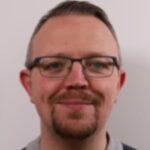
Tim Thijs works a science policy advisor at the Research Foundation – Flanders (FWO), where his main tasks are the coordination of the Applied Biomedical Research programme and FWO’s Gender & Diversity policy. He has broad experience in biomedical research, having obtained his PhD in Biochemistry and Biotechnology at the Laboratory for Thrombosis Research at KU Leuven in 2012, followed by postdoctoral research experience at the Etablissement francais du sang in Strasbourg, before returning to KU Leuven as EU project manager and grant writer at the department of Pharmaceutical and Pharmacological Sciences. He joined FWO as science policy advisor in 2019. In his current role at FWO, Tim applies his combined scientific and policy experience to strengthen research assessment and help advance inclusive research policy in Flanders.
Véronique Halloin
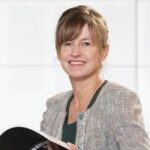
Véronique Halloin obtained her degree in chemical engineering in 1986 and a PhD in applied sciences in 1992. Since October 2008, she has served as Secretary General of the F.R.S.–FNRS, the funding body for basic research in French-speaking Belgium, and of the CREF (Conference of Rectors of the French-speaking Universities of Belgium). She is a member of several bodies, including Science Europe, Academia Belgica, and the Queen Elisabeth Medical Foundation. She is a Belgian delegate to the CERN Finance Committee and Council, as well as to the OECD Global Science Forum. Since March 2020, she has been President of ESF (European Science Foundation), and since 2022, an elected member of the Royal Academy of Belgium (Class “Technology and Society”, vice-director). She is also Honorary Full Professor of Chemical Engineering at ULB.
Florence Degavre
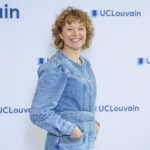
Florence Degavre is a professor at UCLouvain. She teaches socio-economics and gender studies in the Master’s program in Economic and Social Policy and the Interuniversity Master’s program in Gender Studies. Her research focuses on the economics of care, feminist economics, and gender-based violence. She served as coadvisor to the rectorate on issues of equality, diversity, and inclusion (EDI) from 2022 to 2024.
Diana Sarkees Avoo
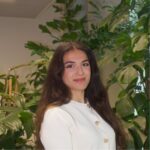
Diana Sarkees Avoo is a recent biomedical engineering graduate from the Brussels School of Engineering. During her studies, she was involved in WomInTech for three years, a student-led initiative promoting women in STEM, and served as its Vice President last year. She continues to support the organization as an honorary member. Today, she works as a junior machine learning engineer at Kantify, contributing to AI-driven drug discovery while remaining committed to advancing inclusive scientific communities.
Hadis Shakeri
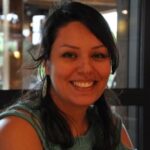
“As a woman, a migrant scientist, and a mother, the gender dimension in research is not something abstract to me — it is something I live and work with every day. I was born and raised in Iran, where I studied Biology at the Shahid Chamran University of Ahvaz and the University of Isfahan after passing highly competitive national entrance exams. In 2011, I moved to Belgium to pursue biomedical research. I completed my Master’s and PhD in Medical Sciences at the University of Antwerp, focusing on cardiovascular disease. Later, at the Université libre de Bruxelles, I discovered the inspiring field of stem cell research. Since 2023, I have been a postdoctoral scientist at the Vrije Universiteit Brussel, working on stem cells and neuroimmunology. Beyond my academic titles, I try to be an engaged member of society. From working as a journalist in Iran to supporting newcomer women in Antwerp, bringing science to primary schools, inspiring young children, and engaging in BeWiSe, I believe science truly matters when it serves people. For me, being a scientist means staying connected to society and asking meaningful questions and helping shape a future where knowledge is used with responsibility and humanity.”
Malika Belrhazi
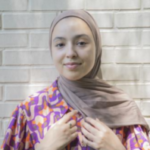
Malika Belrhazi, born and raised in Antwerp, holds both a Bachelor’s and Master’s degree in fundamental mathematics from the University of Antwerp. She continued her academic career with a PhD research project focused on the role of Riemannian geometry in velocity-dependent mechanical systems. Alongside her research, she is actively involved in teaching and supervising bachelor’s and master’s students. Passionate about science communication, she regularly participates in outreach events such as Science Day and Proefkot. Malika is also committed to diversity and inclusion initiatives within academia, aiming to make science more accessible and representative. She is the winner of the PRESS>>SPEAK competition and received the Gobelijntje Award, recognizing her as the faculty’s Best Teaching Assistant for 2024–2025.
Hind Hussein
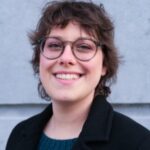
Dr. Hind Hussein is a molecular biologist and immunologist whose work focuses on uncovering immune mechanisms in gastrointestinal diseases using single-cell omics and in vivo models. She earned her PhD in immunology at ULB and is currently a postdoctoral researcher at KU Leuven, where she has led projects identifying mast cell–driven pathways in Irritable Bowel Syndrome and mapping immune cell states in human tissue. Born in Belgium and raised in Lebanon, Hind brings an international perspective to her scientific career and a deep commitment to equity in academia. In 2022, she founded the Young Belgian Immunological Society (yBIS), a community supporting early-career immunologists in Belgium. She also coordinates the “Improving Academia” working group within yEFIS, advocating for healthier and more inclusive academic environments. Most recently, she initiated the launch of the Virinia collective, an interdisciplinary European network dedicated to advancing research on pain and menstrual conditions in women. Driven by curiosity and a passion for mentorship, Hind aims to build an independent research group while continuing to uplift young scientists navigating the challenges of STEM careers. She is particularly committed to empowering women and underrepresented groups in biomedical research.
Liliana D’Alba
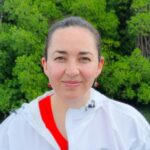
Liliana D’Alba received her M.Res. in Ecology and Environmental Biology and Ph.D. in Evolutionary Biology from the University of Glasgow, UK. She is a permanent researcher at the Naturalis Biodiversity Center and an affiliated professor at Ghent University. An integrative biologist, her research focuses on the evolution of animal coloration and the functional morphology of vertebrate eggs, integrating field and laboratory approaches in studies of birds and reptiles. She has authored 90 peer-reviewed publications and has received international funding, including support from the National Science Foundation, Research Foundation – Flanders (FWO), European Commission, National Geographic Society, and CONACYT.